Sustainable Phone Case Materials: What They Are and How to Choose
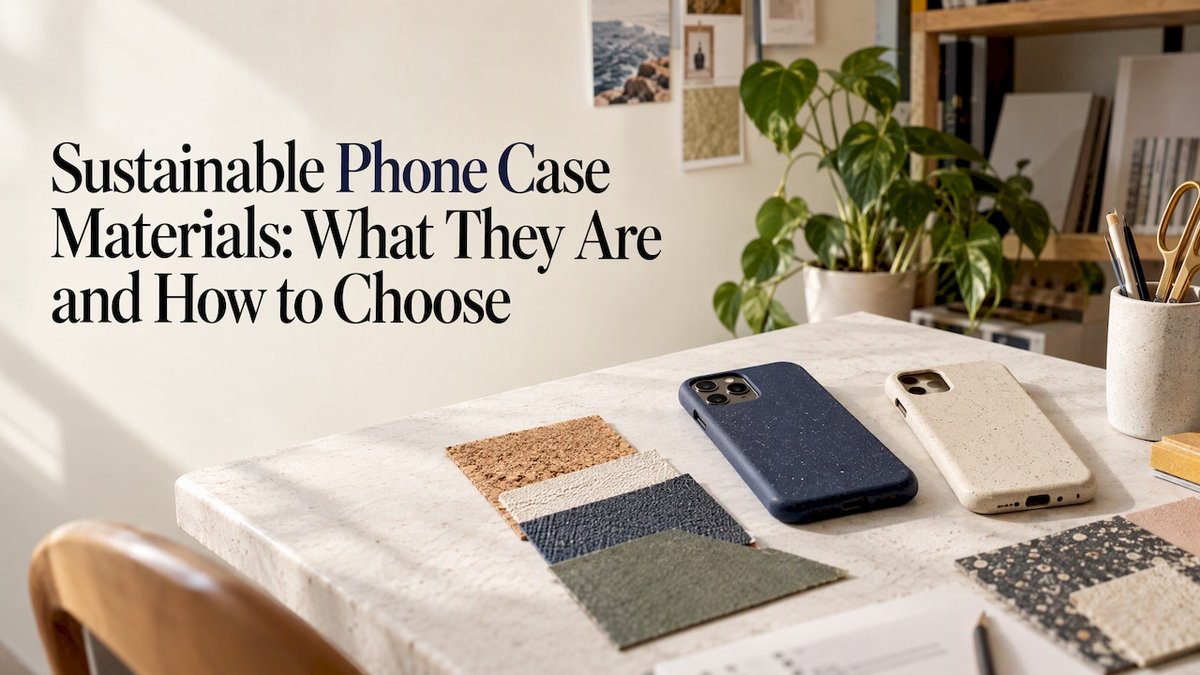
Sustainable phone case materials fall into three groups: recycled content (such as recycled plastics and ocean waste), plant-based materials (flax straw, bamboo, cork, plant polymers) and conventional materials made to last far longer than a cheap case. In Australia, the claim that matters most is the disposal pathway: a case labelled “compostable” only breaks down as promised under specific conditions. This guide explains each material, what the labels mean here, and how to judge a case before you buy.
TL;DR
- Common eco materials in phone and electronics cases include bamboo, cork, walnut, recycled ocean plastic, fishing net fibres and flax straw, according to D3O’s materials guide.
- “Compostable” has a specific meaning in Australia: it relates to Australian Standards for commercial or home composting, not simply “plant-based”.
- Bioplastics are a tiny slice of Australia’s plastic use, and the right disposal system is what decides whether a green claim holds up.
- A case that survives years of drops and daily use keeps another case out of the bin, so protection and longevity belong in any sustainability check.
- Old cases and accessories can go to MobileMuster for recycling.
Table of Contents
- The main sustainable phone case materials
- What “compostable” really means in Australia
- Durability: the part of sustainability people forget
- How to check a sustainability claim
- What to do with an old case
- Our perspective
- Shop protective, long-lasting cases from MONTE
- FAQ
- Sources
The main sustainable phone case materials
Most “eco” cases fit one of the groups below. The same word, such as “biodegradable”, can mean very different things, so it helps to know what is actually in your hand.
| Material type | What it is | What to look for |
|---|---|---|
| Recycled plastic | Plastic recovered from post-consumer or ocean waste, reprocessed into case material | A stated recycled percentage, not just “made with recycled materials” |
| Flax straw and plant polymers | Agricultural by-products blended with a bio-based binder | The standard it is certified to, and how it should be disposed of |
| Bamboo, cork, walnut and other natural materials | Wood-type or bark-type materials used on their own or as a fibre in a composite | What binds the natural material, because the binder shapes how it ages and breaks down |
| Fishing net fibres | Recovered nylon netting turned into fibre | Where the material is sourced and how much of the case it makes up |
| Durable conventional materials | Dual-layer builds designed to withstand drops over a long life | Real drop protection and a design you will keep using |
D3O’s overview of eco materials in electronics protection lists bamboo, cork, North American walnut, recycled ocean plastic, fishing net fibres and flax straw as raw materials in use. It is a handy checklist of what to expect on a product page.
Recycled content
Recycled content is the most straightforward way to cut the amount of new material in a case. The detail that matters is the percentage. In October 2025, Future Five reported that EFM had added D3O Zero, made from 99% recycled content, to its iPhone 17 case range, and described it as the first Australian brand to use that material. A figure like that is something you can compare. A vague line such as “eco-conscious materials” gives you nothing to compare.
Plant-based materials
Flax straw, bamboo and plant polymers appeal because they come from renewable sources. Two questions follow. How much of the case is actually plant material, and what holds it together? Many plant-based cases blend natural fibre with a polymer binder, and the binder decides how the case behaves when you throw it out.
Natural materials such as bamboo, cork and walnut
These give a distinctive look and feel. They are usually used as a surface layer or a fibre in a composite rather than as the entire protective structure. If a case is marketed on its natural material, check how the case is built underneath.

What “compostable” really means in Australia
This is where most confusion sits. A case marketed as biodegradable or compostable does not disappear in a garden bed or a kerbside bin.
The Australian Government’s Plastics Flows and Fates Study defines “compostable” as a specific term for a biodegradable bioplastic article that meets Australian Standards for commercial composting (AS 4736-2006) and/or home composting (AS 5810-2010) within a defined period and also meets compost quality criteria. So the label has two parts: a standard, and a system that can process the item.
D3O draws the same distinction in practical terms. “Home compostable” means breaking down into organic soil without intervention, while “compostable” means degradation achievable only in an industrial composting facility, at 55°C or above for at least part of the process.
Researchers at UTS add an important point: in Australia, compostable plastics need commercial or home compost systems to biodegrade as designed, and certified compostable plastics meet Australian Standards. They also note that bioplastics that escape into the environment without proper management can still cause harm, because biodegradation can take years or decades.
What this means when you shop:
- Look for the standard named on the product (for example AS 5810 for home composting or AS 4736 for commercial composting). A bare word like “biodegradable” tells you very little.
- Check whether the case is home compostable or industrial-only. Industrial-only means it needs a facility, and not every council collects that kind of material.
- Treat the case’s life as the main event. A compostable label describes the very end of it.
How much of the market is bioplastic?
The UTS report estimates that less than 1% of the nearly 3.5 million tonnes of plastic used each year in Australia is bioplastic. It also says about 90% of the bioplastics used here are compostable ones, in uses such as kitchen caddy liners and food serviceware. Collection and processing systems here were built around those applications, which is why the disposal route for a phone case deserves a closer look than the front-of-pack claim.

Durability: the part of sustainability people forget
A case that cracks in three months and gets replaced is rarely the greener option, whatever it is made of. That is why protection belongs in the same conversation as material.
When you compare cases, think about these points:
- Impact protection. Look for a clear description of how the case absorbs a drop, such as a layered build with a shock-absorbing inner layer and a rigid outer one.
- Fit and coverage. A snug, model-specific fit protects the camera and corners better than a loose universal shape.
- Surface wear. A finish that scratches, yellows or peels quickly sends you shopping again sooner.
- Everyday habits. If your phone lives in a bag with keys, or gets dropped on tiles, you need the toughest build you can get.
We go through how each construction behaves in our guide to phone case materials and which to buy, and our advice on choosing a phone case that fits your phone and style covers fit in more detail.
Fabric guides in other product categories show the same logic: the material with the best environmental story is not always the one that lasts. If you like thinking about material trade-offs, this fabric choices guide walks through how different fibres compare, and the same questions (source, wear, end of life) apply to phone cases.
How to check a sustainability claim
Use this short checklist on any product page:
- Is there a number? A recycled percentage, a named material, a named standard. Specifics are a good sign.
- Is the material named? “Plant-based” could mean anything from 10% to 100% plant content.
- Does it say how to dispose of it? Home compost, industrial compost, recycling or general waste should be stated clearly.
- Is the packaging included? A case in plastic-free packaging cuts waste from the first day.
- Will you keep using it? Pick a design you will still like in two years and a build that will last that long.
- Does it fit your next phone? Cases are model-specific, so a case you can hand on or reuse with accessories matters. Our MagSafe accessories guide helps you buy add-ons that stay useful.
What to do with an old case
When a case does reach the end of its life, avoid the kerbside recycling bin, since phone cases are small, mixed-material items. MobileMuster, the Australian mobile phone recycling program, says its recycling partner can recover more than 95% of a mobile phone’s materials and can recycle plastic cases and accessories. Check its site for the nearest drop-off point.
Our perspective
We design MONTE cases around one idea: the most useful thing a case can do for the planet and your wallet is stay on your phone, protected and loved, for a long time. That is why every case we make has dual-layer protection designed to withstand drops.
We also make our designs in limited runs. That means each release is a considered, original piece rather than a warehouse full of generic stock, and it gives you a case you will want to keep using because you chose it for its style.
Coordinated accessories help too. When your case, MagSafe wallet, AirPods case and ring holder come from one colourway, you are far less likely to swap pieces just because they clash. Our custom bundles are built for exactly that.
So when you read about sustainable materials, ask two questions: what is it made of, and will I still be using it in two years? We built MONTE to answer the second one well.
Josua
Shop protective, long-lasting cases from MONTE
If you want a case you will keep, our phone cases are $79 each, with dual-layer drop protection and fashion-forward designs for iPhone, Samsung and Pixel.

Build a full set and keep everything matched: AirPods cases are $39, MagSafe wallets are $49, and our iPad cases are $109. Our personalising guide and colour matching guide help you pick a look that suits you.
FAQ
Are recycled phone cases as strong as regular ones?
It depends on the design, not just the material. A well-engineered case with recycled content can protect well, and a poorly built one in any material will not. Look for a clear description of how the case absorbs impact, and for the recycled percentage.
Is a compostable phone case safe to put in my home compost?
Only if it is certified home compostable. In Australia, that relates to the home composting standard AS 5810, and cases that are only industrial compostable need a commercial facility. Check the product page for the exact wording.
Can I recycle a phone case in Australia?
MobileMuster says its recycling partner can recycle plastic cases and accessories, so the program is a good first stop for an old case. Check the MobileMuster site for current drop-off locations.
What is the most sustainable way to buy a phone case?
Choose one with a build that will last, a design you will still enjoy and a fit for your current phone. Then recycle it responsibly when you finish with it. Buying fewer cases over time usually does more than any single material choice.
Sources
- Examining sustainability claims of bioplastics, UTS
- Australian Plastics Flows and Fates Study 2019-20 National Report
- Decrypting eco-materials in electronics protection, D3O
- EFM unveils iPhone 17 cases with D3O tech, Future Five
- MobileMuster frequently asked questions